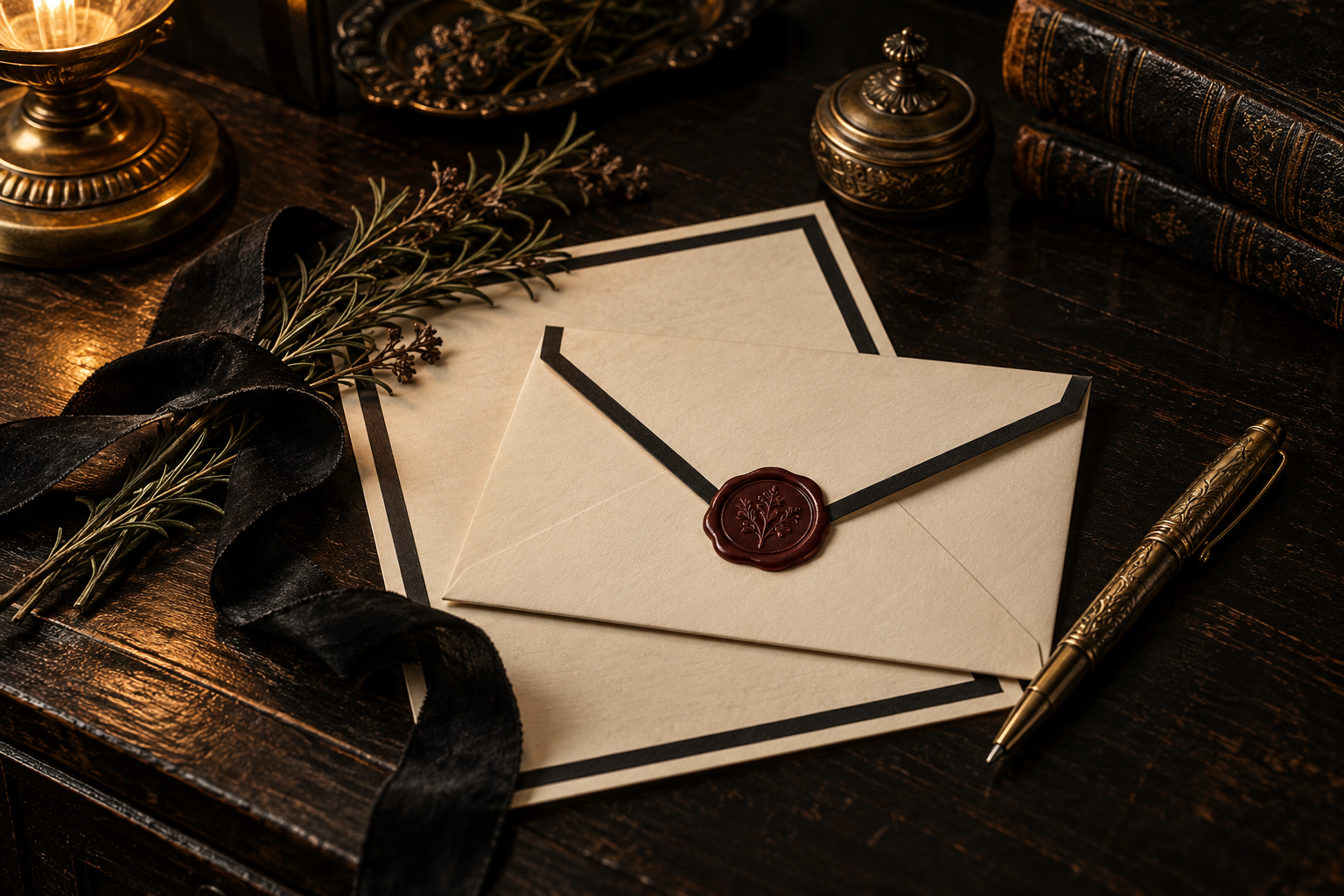
Before a mourner opened a Victorian letter, the envelope had already delivered part of the message. A black border meant death had entered the household. The paper did not explain, soften, or console. It simply arrived dressed for the occasion.
The custom was widespread enough that the National Postal Museum holds dozens of black-edged covers spanning decades. Some were professionally printed. Others were ruled by hand, which suggests that grief did not always wait for the stationer to open.
The border did practical work
Mourning stationery belonged to a larger system of visible customs: black clothes, veils, armbands, wreaths, cards, and carefully observed periods of mourning. The border carried that language into the mail. It warned the recipient before the letter was read and made an ordinary sheet part of a social ritual.
It could announce a death, acknowledge sympathy, or continue a correspondence while the writer was in mourning. The National Museum of American History preserves mourning stationery used by President Chester A. Arthur after James Garfield’s death, along with black-bordered memorial cards made for Abraham Lincoln. Private grief and public grief shared some of the same paper habits.
The border also changed over time. Period etiquette manuals often assigned meaning to the width of mourning bands, but practice varied by place, household, printer, and budget. It is safer to read a broad black edge as emphatic mourning than as a precise calendar. People have always been less orderly than etiquette books would prefer.
An envelope can outlive the letter
Many surviving mourning covers have been separated from their contents. That leaves historians with postmarks, handwriting, stamps, addresses, and a strip of black ink. Sometimes those scraps are enough. A hand-drawn black border in the Postal Museum collection belongs to correspondence from Rachel Walters, whose family endured several deaths during the Civil War. The letter once inside is uncertain; the border still says that ordinary life had been altered.
By the early twentieth century, black-edged stationery was losing ground. The museum notes that it was already in rapid decline by 1923. Mourning did not disappear. Its paper uniform did.
Why it still looks so strong
A black border is almost brutally economical. It turns blank space into a frame and makes the page feel deliberate before a word is written. Modern stationery borrows that severity because it still works: cream paper, dark ink, one firm line, no decorative panic.
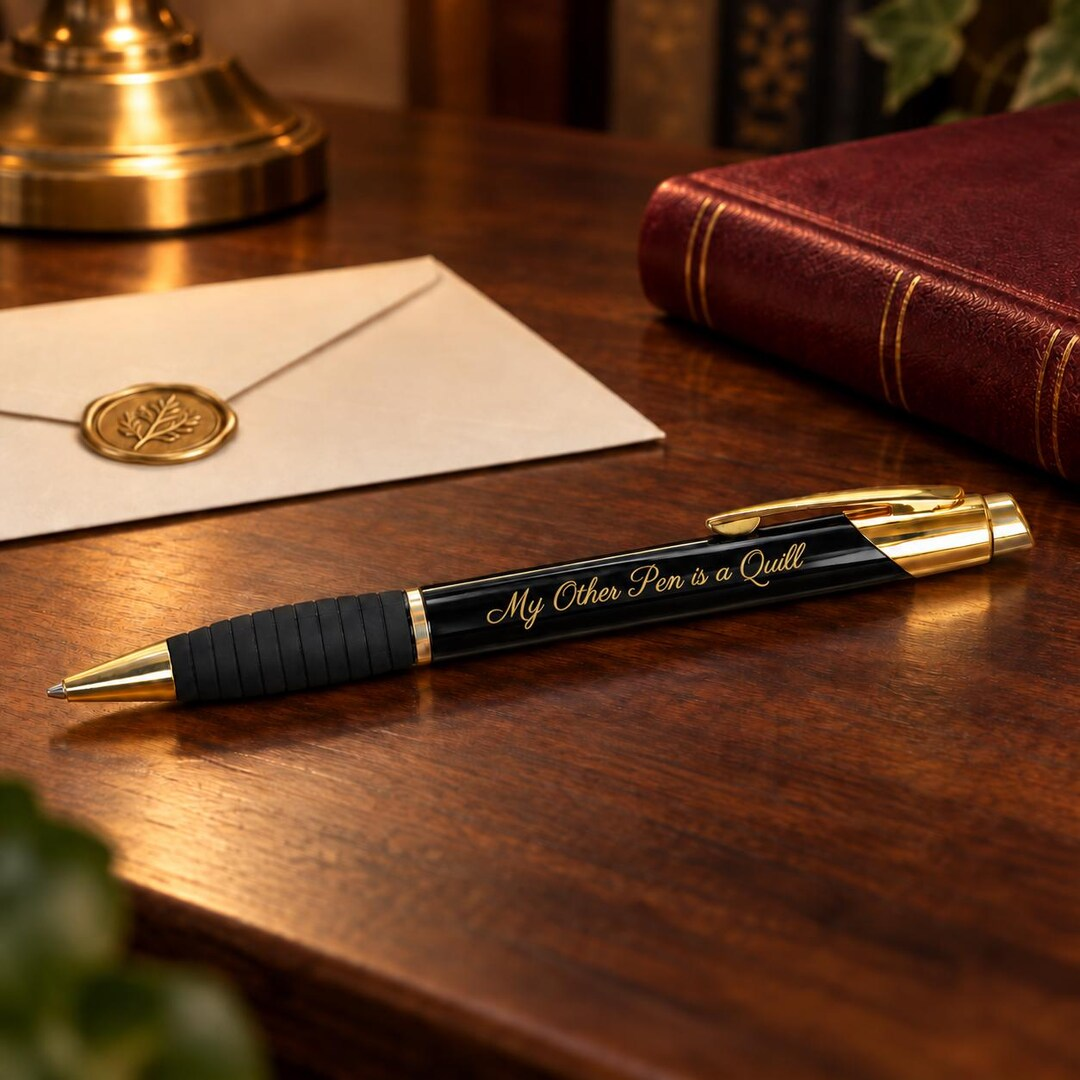
Good tools suit the same mood. The My Other Pen Is a Quill brass ballpoint has the old-desk look without asking anyone to trim a feather or keep an inkwell from ruining the table.
Leave a Reply