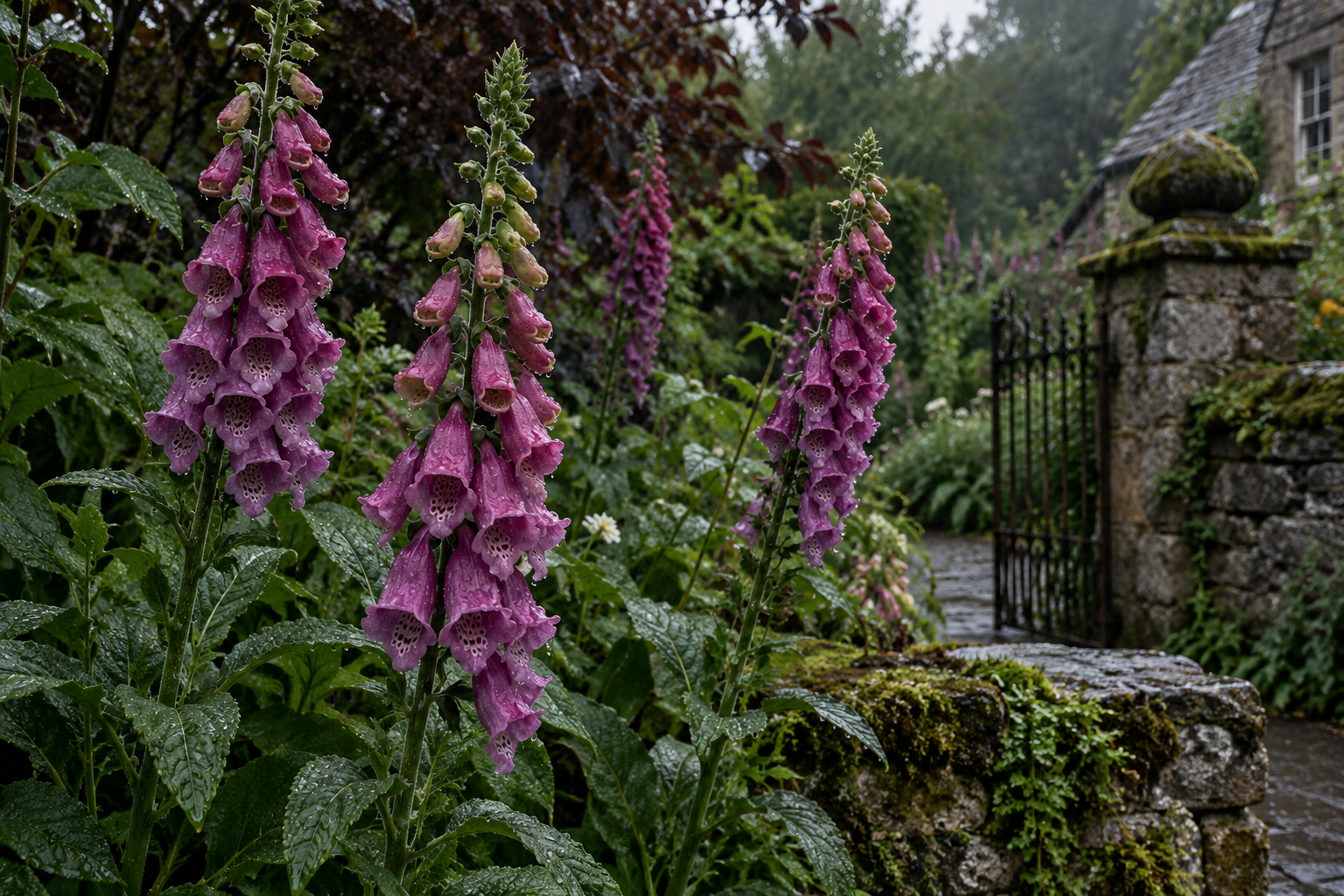
Foxglove does not need help becoming dramatic. It raises a tower of spotted bells above the garden, feeds bumblebees, scatters seed with confidence, and carries chemicals capable of altering a human heartbeat.
Beautiful, historic, and entirely uninterested in your good intentions.
A woodland plant with a theatrical streak
Common foxglove, Digitalis purpurea, is native to parts of western Europe and has naturalized far beyond them. It usually spends its first year as a rosette of soft leaves, then sends up a flower spike in its second year. The tubular flowers are often purple or pink, with pale interiors and dark spots that guide visiting bees.
The name Digitalis comes from the Latin digitus, or finger, a reference to the flowers’ glove-like shape. The plant prefers rich soil and dappled shade, though it tolerates a broader range of conditions. The Royal Horticultural Society’s growing guide describes it as a woodland plant and recommends allowing biennial forms to self-seed if you want them to persist.
Medicine and poison share a stem
All parts of foxglove contain cardiac glycosides. These compounds affect the heart. Carefully purified and precisely dosed relatives of those chemicals became important medicines; eaten from the garden or brewed into tea, the plant delivers an uncontrolled dose.
The physician William Withering published his study of foxglove for dropsy in 1785 after observing both its useful effects and its dangers. His work helped establish a more systematic approach to drug dose and response. It did not turn foxglove into a safe home remedy.
Kew’s species profile notes that cardiac glycosides occur throughout the plant. Poisoning can cause nausea, vomiting, abdominal pain, visual disturbance, weakness, and dangerous changes in heart rhythm. Leaves have been mistaken for comfrey and other edible or medicinal plants.
How to grow it without becoming a cautionary tale
Put foxglove where it can be seen without being brushed constantly. Wear gloves when handling plants and seeds, then wash your hands. Keep cut stems, seed packets, and pulled plants away from children and animals. Do not add foxglove to a tasting garden, edible-flower bed, or herb patch where identification might become casual.
If someone may have swallowed foxglove, do not wait for symptoms and do not induce vomiting. In the United States, call Poison Control at 1-800-222-1222 or use Poison Control’s foxglove guidance; call emergency services for severe symptoms. Elsewhere, contact the local poison information service.
Why gardeners keep it
Because it is magnificent. Foxglove brings vertical structure to shade, flowers when many woodland plants are finished, and gives large bees a row of bells to investigate. White cultivars can look ghostly under trees. Deep purple forms turn a cottage border into something less polite.
Let it self-seed where appropriate, or cut the spike after flowering if you want control. In regions where foxglove escapes cultivation, check local invasive-plant guidance before encouraging it. A plant can be beloved in one landscape and a problem in another.
Respect is the useful middle ground. You do not need to fear foxglove, and you should not treat it like salad. Give it shade, space, gloves, and the dignity of being exactly what it is.

Leave a Reply