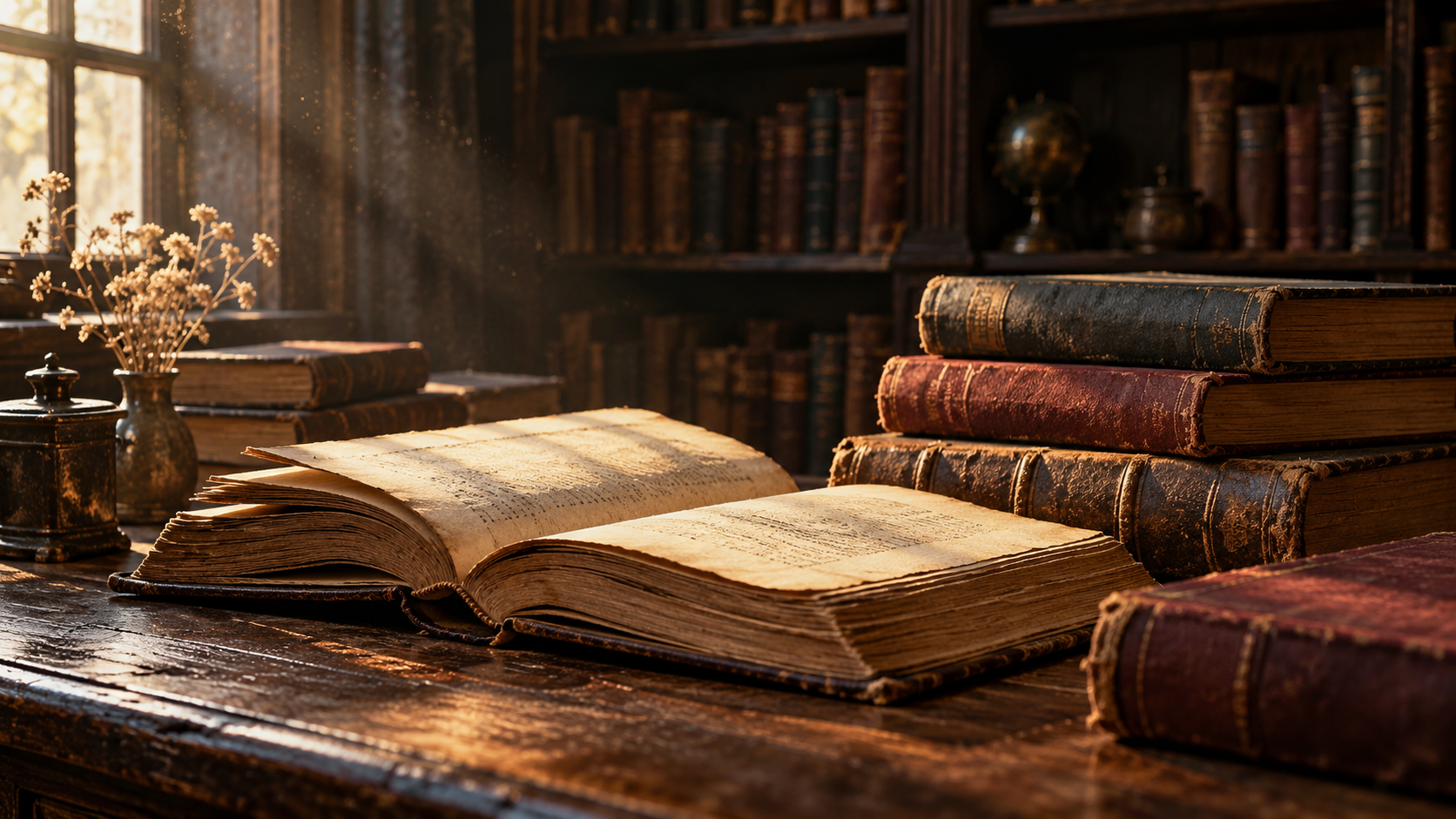
Old books do not smell like one thing. They smell like paper, cloth, leather, glue, ink, dust, storage, and slow chemical change. A paperback from 1974 and a rag-paper volume from 1740 may both smell “old,” but they are not releasing the same mixture into the air.
The smell is a cloud of molecules
Paper and bindings release volatile organic compounds, or VOCs, as they age. “Volatile” means the molecules can enter the air at ordinary temperatures. Once airborne, they reach the nose and become the dry vanilla, almond, grass, dust, vinegar, or woody notes people associate with an old library.
Researchers have used those emissions as a non-destructive way to study collections. The paper behind “Material Degradomics: On the Smell of Old Books” treated the odor profile as evidence of how paper is breaking down. More recent work has likewise found that books of different ages and materials produce different VOC patterns.
Paper has a biography
Older rag papers were made largely from linen or cotton fibers. Later mass-market papers often relied on wood pulp and carried more lignin and acid. Cellulose chains shorten over time, oxidation continues, and components of the paper produce smaller compounds that can escape into the air.
Furfural and related compounds are associated with cellulose degradation. Aldehydes, alcohols, organic acids, and other molecules may join the mix. A 2025 study of two historic books found different chemical signatures in a sixteenth-century rag-paper book and a nineteenth-century wood-pulp volume, evidence that the smell depends on material and history rather than age alone.
The binding has opinions too
Books are composite objects. Animal glue, starch paste, cloth sizing, leather dressing, printing ink, adhesives, and coatings all age on their own schedules. Shelves and cabinets can add wood-related terpenes. Tobacco smoke, perfume, coal soot, cooking grease, and damp storage can become part of a book’s odor long after the reader is gone.
That is why one old book smells sweet and another smells sharp. You are not smelling “history” as a single substance. You are smelling a record of materials and rooms.
Musty is a different warning
The familiar dry smell of aged paper is not automatically mold. Active mold is more likely when a book has been stored in damp conditions and may appear as fuzzy or powdery growth, staining, distortion, or a persistent earthy odor. Do not press an uncertain book to your face and inhale deeply. Isolate it from the rest of the collection and ask a conservator or library professional for advice, especially if the book is valuable or the reader has respiratory sensitivities.
Good storage slows the story
Heat, moisture, strong light, and rapid swings in humidity speed deterioration. Keep books away from leaking walls, attics, damp basements, radiators, and direct sun. Shelve them upright with support, avoid crowding, and handle brittle paper from underneath rather than pulling at the spine.
Do not spray fragrance, household cleaner, or deodorizer onto a book. The chemistry is already complicated enough.
The old-book smell is appealing because it is intimate. It makes a material object feel alive with use and time. Chemically, though, it is closer to a quiet weather report: this paper was made this way, stored here, exposed to these conditions, and is changing still.

Leave a Reply