
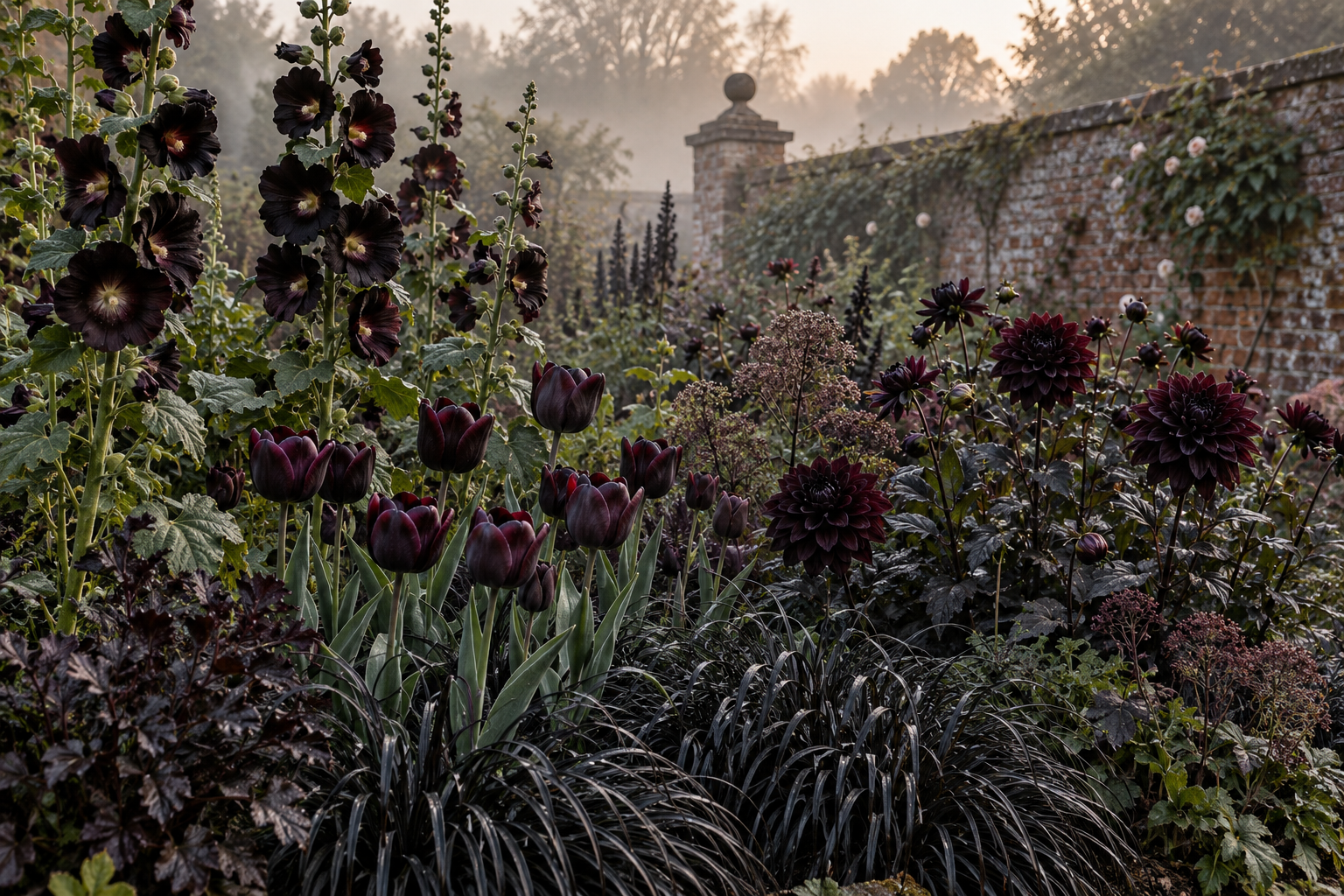
There are almost no truly black flowers. The garden cheats with pigment, shadow, and distance. What looks black from the path usually opens into wine, aubergine, chocolate, or a purple so deep it has stopped explaining itself.
That is good news. A bed made of flat black shapes would be lifeless. A dark garden works because those hidden colors change from morning to evening and because the plants have different heights, leaves, and seasons.
Ten plants that can carry a black garden
1. ‘Queen of Night’ tulip
This late tulip is glossy, deep purple, and close enough to black to earn its reputation. The Royal Horticultural Society’s 2026 trial described it as a rich, sophisticated purple and noted that the petals turn from silky to matte as they age. Plant it through pale grasses or silver foliage so the cups do not disappear into bare soil.
2. ‘Nigra’ hollyhock
‘Nigra’ makes tall spikes of single chocolate-maroon flowers. The color has warmth in it, especially when backlit. It wants sun and drainage, and it looks best against an old wall, fence, or shed where its height has something to answer to. The RHS plant profile lists it as a vigorous biennial or short-lived perennial that can reach two meters.
3. ‘Black Beauty’ dahlia
Dahlias are useful because they arrive late, after spring bulbs have vanished. ‘Black Beauty’ and other very dark cultivars read as near-black red in low light. Give them sun, water, support, and a winter plan appropriate to your climate. Dark dahlias are dramatic, but they are still dahlias: hungry, tender, and unwilling to pretend otherwise.
4. Black mondo grass
Ophiopogon planiscapus ‘Nigrescens’ is the reliable black line at ground level. Its narrow leaves hold their color longer than any flower and give pale gravel or green groundcover a hard edge. It spreads slowly, which is either a virtue or an insult depending on your patience.
5. ‘Black Barlow’ columbine
This double columbine carries dark purple, almost black flowers in late spring. It likes the softer light at a woodland edge and brings a loose, old-garden shape to the bed. Let a few seed heads stand if you want volunteers, but expect the offspring to make their own decisions about color.
6. ‘Molly Sanderson’ viola
A low plant with velvety, nearly black flowers and a small yellow eye. Use it near the front of a bed, in a trough, or where you will actually bend down and see it. It does well in cool weather and may sulk through serious heat.
7. Chocolate cosmos
Cosmos atrosanguineus has dark maroon flowers and a faint chocolate scent on warm days. It gives the garden movement without introducing a bright color. It is frost tender in many climates, so check local guidance before deciding whether it can stay in the ground.
8. ‘Black Pearl’ ornamental pepper
The glossy purple-black leaves are the real work here. Small purple flowers become round black fruit, then ripen red. Treat it as an ornamental rather than a snack. It is especially useful in containers where its compact shape can hold a composition together.
9. ‘Onyx and Pearls’ penstemon
This plant earns its place through foliage: dark stems and leaves behind pale tubular flowers. The contrast keeps a black garden from becoming a single heavy mass. It also gives pollinators something useful, which is more than can be said for a bed designed only for photographs.
10. ‘Black Adder’ agastache
The flowers are violet rather than black, but the dark spikes read almost black from a distance. It flowers late, draws bees, and adds a narrow vertical form among round dahlias and low grasses.
How to keep the bed from turning into a bruise
Start with foliage. Black mondo grass, dark-leaved heuchera, smoke bush, or a dark elder can hold the idea after individual flowers fade. Then stagger the season: tulips and violas in spring, hollyhocks and columbines in early summer, dahlias and agastache later.
Add one material that catches light. Silver lamb’s ear, pale gravel, weathered wood, or cream stone will do. Green also belongs here. A black garden with no green looks like a merchandise display. Leaves make the darker plants look darker.
Finally, check every plant against your own soil, winter lows, summer heat, and pets. “Black” is a color description, not a growing condition.

Leave a Reply